
Grass-fed Beef & Fine Wine

Grass-Fed Beef & Fine Wine Share Many Traits:

            Aging – Grass-fed beef & fine wine both require proper aging.
Breathing – Both require proper rest and exposure to air before enjoying.
            Taste – Both are known for their special flavor and taste.
            Aftertaste – Both leave a pleasant aftertaste.

Let’s explore:

Aging – Tests have shown that grass-fed beef has a better taste and is tenderer when aged for approximately two weeks vs. when prepared as fresh meat. Likewise, we know how important aging is to wine to bring out the flavor.

Breathing & Taste – This may be the most overlooked ingredient for a truly tender and tasty steak – and even a roast. After a steak or roast has reached room temperature, it needs to be hand rubbed with either sea salt or Himalayan salt and then left to rest for at least one hour before cooking. When salt is rubbed into steaks or roasts and left to rest, the natural flavor of the meat will come forward – as long as steaks are not overcooked and roasts are cooked slowly at a low temperature. The same is true with wine. A good bottle of wine needs to be opened and left to breathe to allow flavors to come forward.

Aftertaste – Both a good wine and a good, grass-fed steak or roast, will leave that special aftertaste which makes us start thinking about our next meal with a good grass-fed steak or roast – and a good glass of wine!

What about grain-fed meats?
Grain-fed meats will all taste nearly the same because most are fed-out in feed lots with GMO corn. Grain-fed meat is usually blander than properly finished grass-fed meat.

Just think – since the grain-fed phenomenon began in the 1950s, a whole new industry has emerged. This is the Steak Sauce Industry. Steak sauce has come to the rescue of this bland, grain-fed meat!

We can, however, enjoy what nature intended meat to taste like, and eliminate artificial flavorings, when we eat grass-fed meat! (And have a glass of fine wine – if you so choose.)
Posted on July 15, 2015 .

Why Do Cattlemen Use Added Growth Hormones, Steroids?

Growth Hormones, Steroids – Money vs. Health

Using Growth Hormones, Steroids, is a no-brainer for cattlemen. For an investment of $20 to $30 per animal, a cattleman can net $200 to $300 of additional income by using Growth Hormones, Steroids.

A grain-fed steer that weighs 1300 pounds, can weigh 1400 – 1500 pounds when Growth Hormones, Steroids have been administered during its life. With the price of $2.00 per pound, this is a big profit for a $20 to $30 investment.

Keep in mind, there is nothing illegal in the Unites States with using Growth Hormones, Steroids, on the animals U.S. consumer eat. Other countries, such as Great Britain, ban the use of Growth Hormones, Steroids, for human consumption; however, in the U.S., the almighty dollar seems to trump health – whether it’s the environment, the energy we produce, or the food we eat.

There is one exception when many cattlemen will not use Growth Hormones, Steroids – this is on the animals they select for their own families to eat! Most cattlemen know that Growth Hormones, Steroids, can cause long term health problems, so they want to protect their loved ones.

Yes, it’s buyer beware. This is a major reason so many consumers are looking at different sources for their food. The grass-fed movement is definitely growing. Many consumers do not want to eat meat from animals that have been fed genetically modified grain, or have been given Growth Hormones, Steroids, or antibiotics.

For many informed consumers, health trumps the almighty dollar. At BF Farms, LLC, we are dedicated to serving these informed consumers with a product that is not only raised in a healthy manner, but also is a product that excels in taste and tenderness.

Posted on July 15, 2015 .

Tasty & Tender Grass-Fed Beef Roast

Fix this simple recipe for a very tasty & tender, grass-fed beef roast.


If you want a tasty and tender, grass-fed beef roast, follow this simple recipe by Diana Webber.

Ingredients:

  • 2 lb. Grass-fed bone in Chuck Roast
  • salt and pepper
  • rosemary
  • potatoes
  • vegetables

Preparation:

  • Preheat oven to 275 degrees.
  • Rub roast with salt and pepper both sides
  • Sear roast on both sides in roasting pan (4-5 minutes each side)
  • Take off heat, add 1/2 cup water, 2 sprigs rosemary, and a little more salt to the water
  • Put a lid on the roaster for one and a half hours
  • Turn up to 300 degrees and cook uncovered for another 20-30 minutes

I love this served with garlic mashed potatoes and asparagus.


We at BF Farms encourage our customers to share their ideas and recipes for the different cuts of grass-fed beef – and lamb as well.
And Diana, we thank you for sharing your scrumptious looking roast recipe!


BF-Farms, LLC, Oklahoma's source for 100% grass-fed beef and lamb.

Posted on July 15, 2015 .

Preparing a Great Grass-fed Steak

A Great Grass-fed Steak vs. a Good Grass-fed Steak

Planning ahead is essential to preparing a great grass-fed steak vs. a good grass-fed steak. Usually, it’s simply time and patience. Keep in mind that your grass-fed beef was not raised as a couch potato in some feedlot, but rather it was left to roam and get plenty of exercise. It is this lifestyle that produces a leaner and more healthful meat. With this leaner beef comes a more toned muscle with connecting fibers (sometimes called protein fibers). It is these connecting fibers that need to relax and soften for your steak to take on great grass-fed steak status.

So, here we go. This is what we do …

Step 1.
Take a steak out of the freezer and put it in the refrigerator. Leave it there for a minimum of 2 days, but not more than 4 days.

Step 2.
Take the steak from the refrigerator and put it on the counter for a minimum of 2 hours, but no more than 4 hours. Your steak will now be at room temperature and will begin to relax.

Step 3.
This is the time when you determine how relaxed your steak is. To do this, simply take your finger and press down on the steak in various places. A relaxed steak will feel soft, whereas a less relaxed steak will feel firm. Your goal is for the entire steak to feel soft. The parts of the steak that feel firm can be massaged. Just pick up the steak and massage the firm parts. It is the connecting fibers that create the firm areas, and the massaging breaks down these fibers.

After you have finished massaging your steak, put it on a flat surface and sprinkle lightly with salt. (We use Himalayan Pink Salt.) Rub the salt into the steak. Do this to both sides. Next we use a Jaccard tenderizer which pokes tiny holes into the meat. This allows the salt to be dispersed all the way through the meat, and these tiny holes will allow cooking time to be reduced by about 40%. After this step is completed, allow the steak to mellow at room temperature for a minimum of 1 hour, but not over 2 hours.

Step 4.
Prepare your grill or skillet. When using a skillet, it should be medium hot. Add a generous amount of real butter and heat until it bubbles. Add your steak and sear for approximately 1 minute on each side. Turn off heat, cover and let set for 1 more minute. Remove lid and move skillet from burner. Let your steak set for about 30 seconds. It is now ready to enjoy!

Please note: This amount of cook-time is for a medium rare steak. Remember that each stove or grill is different. Have patience with the cooking time. You will quickly learn what is best for your appliance.

If you prefer a steak with a specific flavor, add this with the salt, and then use the Jaccard tenderizer. Just remember that grass-fed beef has its own natural flavor, so don’t think you have to add a flavor enhancer like you would with grain-fed beef.

If you don’t have a Jaccard tenderizer, these can be purchased at Academy Sports for around $20.

Posted on July 15, 2015 .

Why Does BF Farms Grass-fed Beef and Lamb Taste So Good?

Just Let Nature Grow Your Grass-fed Lamb & Grass-fed Beef!

We are often asked, Why does BF Farms’ grass-fed lamb & beef taste so good? People from lamb eating countries such as England, Ireland, Australia, and New Zealand will marvel that our lamb is the best they’ve ever eaten. And ditto for our beef.

We credit this good taste to two things; 1. 100% grass-fed lamb & beef, and 2. the management of the soil.  The grass-fed concept is well documented, but the soil that the grass is raised on has an even more compelling contribution.

When we eat food from lamb & beef raised on soil that has been bombarded with synthetic fertilizers, pesticides, and herbicides, doesn’t it just make sense that the meat probably will take on a different taste? Lamb & beef raised with these artificial aids are simply not as healthy and require medicines to keep them going. This is a cycle that cannot have a good ending.

When getting back to a more natural way of raising grass-fed lamb and grass-fed beef, our ego is one of the most difficult obstacles to overcome. Over the past 60 years we have been programed to thinking that we must DO something. We have been taught that we will have healthy crops and animals by adding synthetics. Such folly!

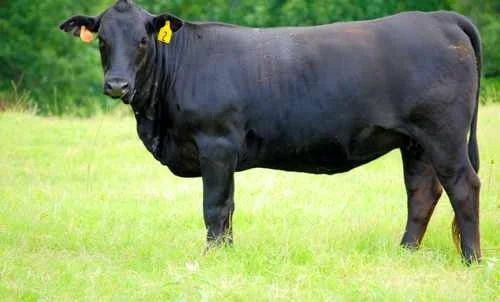
Just look at the cow that raises our beef. She has a four inch wide mouth, four legs, and four stomachs that can process just about anything she eats. She roams over large areas eating, and 80% of what she eats comes out the other end as fertilizer, which remineralizes the same soil she is living on. And we think we can compete and do a better job with synthetics? Our job is quite simple – understand how nature works, then let it do its job. Just don’t get in the way!

Posted on July 15, 2015 .